What if the biggest obstacle to business growth isn’t the market—but the invisible systems shaping people’s behavior? In this thought-provoking talk, Shaji Kizhakathra explores the concept of Social Engineering from a branding and business perspective, revealing how trust, perception, culture, and communication influence customer decisions and organizational success. Whether you’re an entrepreneur, business owner, marketer, or brand strategist, this session offers fresh insights into understanding people before attempting to influence markets.
ADVERTISING
In this session by APOSTROFO, industry veteran Shaji Kizhakathra discusses the realities of the modern advertising and design landscape. He addresses the core anxieties of newcomers, tackling market competition and evaluating the critical choice between freelancing and joining an agency. Kizhakathra emphasizes that long-term career growth relies on structured teamwork, strategic thinking, and scientific execution rather than just acting as a transactional supplier. This video offers a realistic roadmap for anyone looking to build a sustainable and impactful creative career.
AI
In this video by APOSTROFO, industry expert Shaji Kizhakathra discusses the impact of Artificial Intelligence on the graphic design industry. Drawing parallels to the historical transition from manual paste-up artistry to computers, he explains how technological shifts inevitably phase out those who refuse to adapt. Instead of viewing AI as a threat, Kizhakathra encourages designers to embrace it as an advanced tool to enhance their creativity, boost productivity, and elevate the quality of their work. Ultimately, he stresses that AI is only a danger to those who choose not to update their skills.
BRANDING
In this video by APOSTROFO, industry expert Shaji Kizhakathra demystifies the heavily used concept of branding. Rather than just a buzzword, he explains that true branding is built on credibility and consumer expectations. Kizhakathra explores how a product evolves into a household name and details the strategic work an agency does—from evaluating brand-conscious versus price-conscious markets to diving into demographic research and precise brand positioning. Ultimately, he demonstrates how creative content and market positioning turn an ordinary product into a distinct, trusted brand that sustains long-term customer loyalty.
AD FILM
In this video by APOSTROFO, industry veteran Shaji Kizhakathra explores the demanding process of directing commercial ad films. He breaks down the high stakes of working within tight 10-to-30-second timeframes, where extensive pre-production, post-production, and team coordination must execute perfectly without room for re-shoots. Kizhakathra highlights his preference for conceptual, metaphor-driven ads over straight product shots, explaining how subtle “unsaid words”—such as fleeting expressions, glances, and music—build powerful brand recall. Ultimately, he demonstrates that successful ad filmmaking requires a deep understanding of post-production capabilities and precise execution down to the final microsecond.
CASE STUDY
In this video by APOSTROFO, industry veteran Shaji Kizhakathra explores the merits and pitfalls of Artificial Intelligence within the creative and advertising sectors. He frames AI as the next phase of the digital revolution, noting that while it drastically reduces time-consuming tasks like VFX, it can lead to mediocre content if used without human perfectionism. Citing James Cameron’s dedication to Avatar as an example, Kizhakathra argues that AI tools are massive advantages to creators who approach them with genuine patience and dedication. Highlighting global investments and India’s growing role in tech innovation, he assures the upcoming generation that AI is not a threat to fear, but a landscape filled with new opportunities.
CONTENT CREATION
In this video by APOSTROFO, industry expert Shaji Kizhakathra explores the deep psychological underpinnings of successful content creation and copywriting. Rather than focusing strictly on perfect grammar or language proficiency, he emphasizes that impactful content is 70% psychology and understanding audience behavior. Kizhakathra outlines proven industry frameworks like PAS (Problem, Agitation, Solution) and AIDA (Attention, Interest, Desire, Action), using iconic brand examples like Apple and Nike to show how disruptively structured messaging captures market attention. He concludes that while AI tools can generate standard text, human creators remain essential for injecting non-linear storytelling, deep emotional resonance, and strategic nuances that build true brand loyalty.
DESIGNER VS CLIENT
Rejection: Stay consistent and keep working until criticism stops affecting your confidence.
Design Keys: Great design needs attention value (stands out) and motivation value (persuades the audience).
Strategy: Like cricket, design relies on hidden tactics and deep research, not just slapping elements together.
Clients: Explain your thinking, align with their future goals, and study the competition to win them over.
DIGITAL MARKETING COURSES
Digital Marketing Realities: As media consumption shifts from shared televisions to personalized mobile screens, digital marketing has evolved into a highly targeted, data-driven field. However, many institutions unethically exploit this high demand by charging steep fees and making false “100% placement” promises to trap students in unfair contracts. Furthermore, because AI tools are rapidly automating manual data analysis and traditional campaign setups, standard procedural coursework is quickly becoming obsolete. To truly succeed, students must view basic courses as mere entry points and actively focus on continuous self-study and technical upskilling to stay relevant in a fast-changing market.
HIERARCHY
Creative Agency Hierarchy: In a creative agency, a structured hierarchy—scaling from junior designers up to senior art directors and the CEO—is essential for guiding creativity and streamlining decisions. While junior roles focus primarily on local task execution (responsibility), moving up the ladder demands that a professional’s performance directly drives the company’s growth and overall revenue (accountability). Ultimately, rapid advancement relies heavily on mastering team dynamics, speed, and communication, allowing a rising professional to independently manage high-pressure crises and deliver definitive results.
APOSTROFO
The Story of Apostrofo: The name “Apostrofo” is inspired by an Italian fashion-centric reference and serves as a symbol of continuous creative process and collaboration. Functioning like a global consortium for over 28 years, the agency has handled major international brands like Samsung, Sony, Hitachi, and Titan across diverse markets. Today, the organization operates out of hubs like Dubai and spans multiple advanced verticals, including an elite cyber security division led by India’s first cybercrime investigator, a business process management ERP software called Cloud One, and an IT division focused on cutting-edge software, digital marketing, and AR/VR technologies.
SOCIAL IN MEDIA
Social Media and Algorithms: Driven by personalized mobile screens, social media platforms track search history and recent purchases to retarget users with hyper-focused content. However, this algorithmic personalization traps individuals in an intellectual echo chamber or “white noise,” drastically reducing their exposure to out-of-the-box ideas and disruptive new concepts.
PHOTOSHOP
Photoshop vs. Design: Mastering Photoshop tools is entirely different from applying them effectively within a professional design career. While academic courses often teach every complex menu and sub-menu sequentially, true design relies less on knowing 100% of the software and more on absolute clarity regarding the final, visualized product. Ultimately, moving from casual photo editing to professional execution is driven by using a fraction of the tools purposefully to bring a creative, pre-visualized concept to life.
WHAT IS GOOD DESIGN?
Defining Good Design: True design is an applied art that translates creative talent into targeted solutions built entirely around a client’s budget, product goals, and unique consumer audience. Unlike self-indulgent fine art, mastering good design requires continuous observation and building a subconscious visual memory from everything you encounter in daily life. Ultimately, bringing a successful advertisement or layout to fruition relies on a disciplined, endless cycle of micro-decisions—color choice, scaling, and spatial placement—backed by the perseverance to constantly chase your personal masterpiece.
LOGO
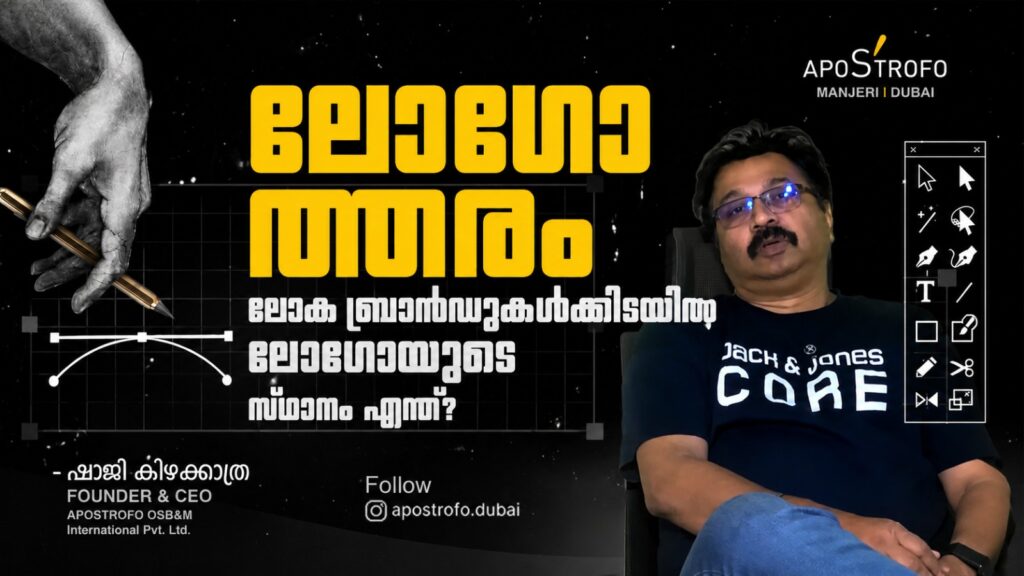
The Power of Logo Design: Far more than a simple emblem, a logo serves as the definitive corporate face that visually distinguishes a business within a crowded digital market. Building a timeless logo requires deeply intentional, multi-layered concepts engineered with mathematical precision like the Fibonacci golden ratio. Ultimately, a premium logo gives founders a distinct competitive edge, instilling immense self-esteem and creating a cohesive brand ecosystem that fosters lasting customer recognition and loyalty.
CASE STUDY OF JWELLERY
Jewelry Marketing Case Study: Jewelry advertising within the beauty and fashion sector relies on a fantasy-driven concept that targets the duality between who customers are and the idealized versions of themselves they dream of becoming. True brilliance in this space requires moving away from standard camera-facing product close-ups to capture raw emotion and intimacy, such as a model looking down at an adorned piece to reflect a deep love for one’s body. Ultimately, crafting an iconic, high-budget luxury campaign demands collaborating with legendary, emotionally expressive photographers and executing flawless visual positioning to successfully capture cross-channel market attention.
We use cookies to ensure that we give you the best experience on our website. If you continue to use this site we will assume that you are happy with it.